
Dry eye after laser eye surgery: does IPL help? Symptoms improved, signs unproven
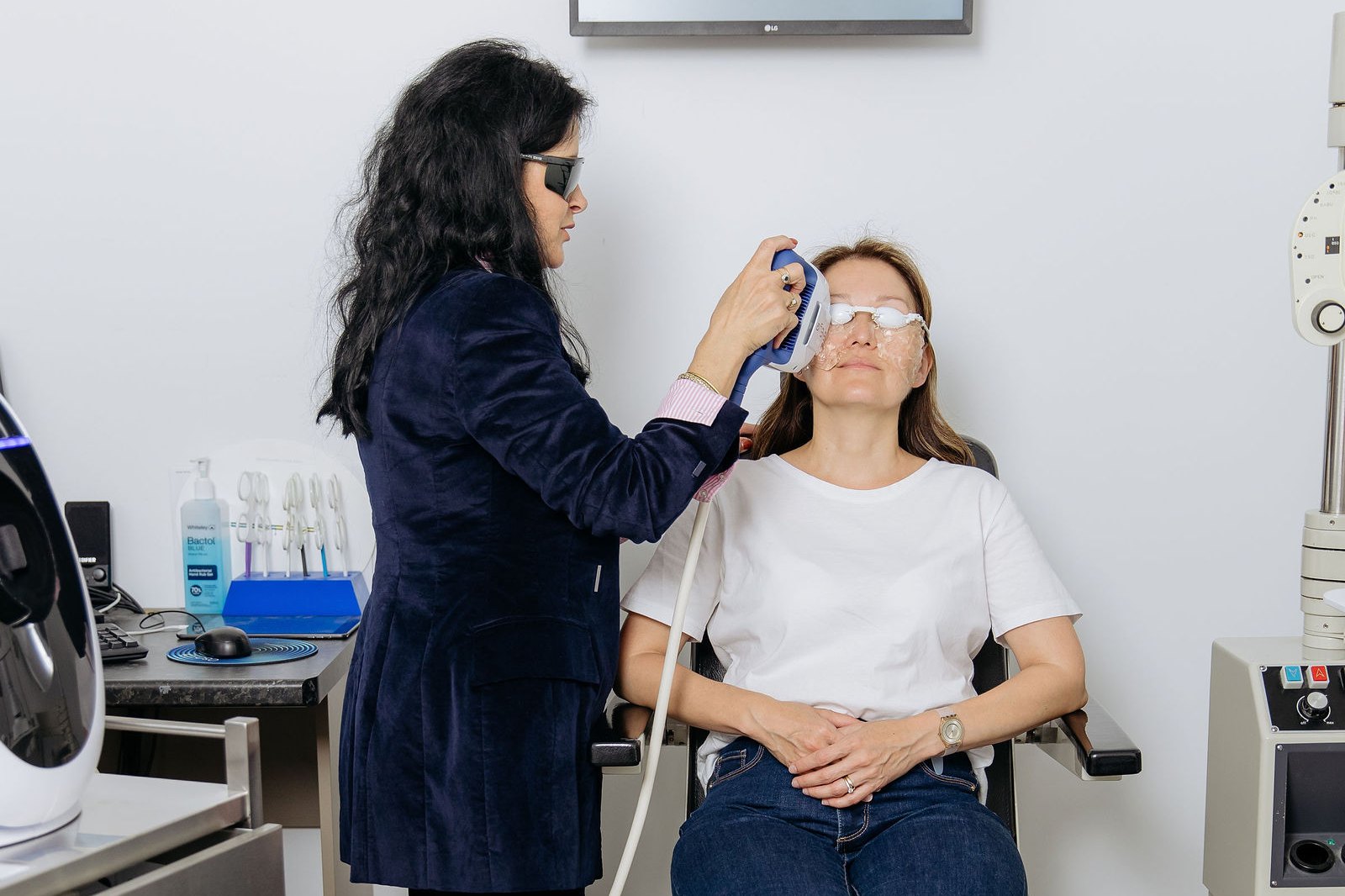
Dry, gritty or fluctuating eyes are a well-recognised complaint after laser vision correction, and for some people the problem lingers well past the healing period. A common question in clinic is whether intense pulsed light (IPL), a treatment more often used for meibomian gland dysfunction, has a place here. A systematic review and meta-analysis published in the Journal of Ocular Pharmacology and Therapeutics in 2026 pooled what has been published on IPL for dry eye after LASIK.
One thing to say plainly at the start. We could only read the published abstract of this paper, not the full text, because the article sits behind a publisher paywall. Everything below comes from that abstract, and we have not added numbers it does not give.
What the review did
The authors, based at two medical schools in the United States, searched five sources (PubMed, Embase, Cochrane, Web of Science and ClinicalTrials.gov) for studies reporting outcomes of IPL in people with dry eye following LASIK. They were willing to include randomised controlled trials, observational studies with control groups, and retrospective or prospective chart reviews.
They looked at six outcomes:
- the Ocular Surface Disease Index (OSDI), a questionnaire score of symptoms
- tear breakup time, a measure of how quickly the tear film becomes unstable
- how often people used artificial tears
- corneal staining, a sign of surface damage
- lipid layer thickness, the oily top layer of the tears
- meibomian gland function
Only four studies met the inclusion criteria, covering 146 treated eyes. Follow-up ranged from 0 to 24 weeks.
The detail that matters most: before and after, with no comparison group
Although the search was open to controlled studies, the abstract states that the analyses were restricted to pre-post single-arm comparisons. The pooled result compares the same eyes before IPL and after IPL. It does not compare eyes that had IPL against eyes that had a sham treatment, standard care, or nothing at all. The abstract reports no between-group result.
That matters a great deal for this particular condition. Dry eye after laser surgery often eases with time as the corneal surface and its nerves recover. Symptom scores also tend to improve when people know they are receiving a treatment. A before-and-after design cannot separate those effects from the effect of the light itself.
What it found
IPL was associated with a statistically significant improvement in symptoms measured by the OSDI (P = 0.005). The abstract does not report how many points the score improved by, so we cannot say how large the change was.
A P-value is the probability of seeing a change this large if there were really no change at all; below 0.05 is the usual threshold for "unlikely to be chance". It says nothing about the size of the benefit, and nothing about what caused it.
For the other five outcomes (tear breakup time, artificial tear use, corneal staining, lipid layer thickness and meibomian gland function), the abstract describes the changes as directionally favourable, but they did not reach statistical significance after conservative correction. The authors also report that heterogeneity between the studies was substantial, meaning the studies did not agree closely with one another.
Symptoms versus signs
This is the heart of the paper. The outcome that improved is the one patients report themselves. The outcomes a clinician measures at the microscope did not show a clear change. How eyes feel matters, but in a study with no comparison group, self-reported symptoms are also the outcome most open to expectation effects.
The authors used cautious statistics, including a correction for the fact that two eyes from one person are not independent. That caution is a strength. "Not shown" is not the same as "shown not to work"; with four studies, the review may simply have been too small to detect a real change. The authors' own conclusion is that IPL may improve subjective symptoms after LASIK, while objective clinical outcomes remain uncertain.
What the studies can't tell us
- Abstract only. We could not read the full paper. We could not check the size of the symptom improvement, any confidence intervals, the design or quality of each included study, which IPL devices and settings were used, how many sessions were given, how long after surgery people were treated, the funding source, or any declared conflicts of interest.
- No comparison group in the analysis. The pooled results are uncontrolled before-and-after changes. Natural recovery after surgery and placebo effects cannot be ruled out.
- Small evidence base. Four studies and 146 treated eyes is a small pool, and the number of people is not given in the abstract.
- Substantial heterogeneity. The studies differed enough that a single pooled answer should be read with care.
- Short follow-up. Nothing beyond 24 weeks, so the abstract cannot tell us whether any benefit lasts.
- Safety. Safety was one of the review's stated aims, but the abstract reports no safety findings.
The authors themselves call for larger, controlled studies with standardised protocols and longer follow-up.
What this means for you in Hamilton
If your eyes have stayed dry after laser surgery, this review does not show that IPL will fix the problem, and it does not show that it won't help. It tells us the question is still open. What it does support is the approach we take with any dry eye: treat the cause, not the symptom. Dry eye after laser surgery can have more than one driver. Some people have an unstable tear film from meibomian gland dysfunction, which may have been present before surgery, and that is the setting in which IPL has been studied most. We have covered that broader evidence in our earlier post on the evidence for IPL in dry eye, and how the treatment works is explained on our IPL therapy page, so we won't repeat it here.
A proper assessment of your glands, tear film and eye surface comes before any treatment recommendation. For many people the starting point is simpler than IPL, and we describe the usual sequence in what a dry eye treatment plan looks like. Preservative-free lubricating drops such as Hylo-Forte are available from the Rose Optometry online store; they were not the subject of this review, and whether they suit you is something to discuss with your optometrist.
The optometrist team at Rose Optometry in Hamilton sees people with dry eye after laser surgery through the dry eye clinic. Whether IPL is suitable for your eyes is a decision to make with your optometrist after an examination. The optometrists at Rose Optometry are Anjali Hira, Emilie Lawson, Jacqueline Rowe, Jagrut Lallu, Jason Shen, Jessica Wood and Stella Wong, and dry eye care is part of their clinical practice.
Rose Optometry is part of the Dry Eye Specialist Group, alongside Visique Rototuna Optometrists and other member practices. If you live outside Hamilton, your local Dry Eye Specialist Group member practice is the place to start.
Reference
- Lin T, Chao A, Kou M, Lee KAV, King T, Mhaskar RS, Jarstad JS. Intense Pulsed Light Therapy for Post-LASIK Dry Eye: A Systematic Review and Meta-Analysis. Journal of Ocular Pharmacology and Therapeutics. 2026;42(8):466-472. PMID 42050421. https://doi.org/10.1177/10807683261442470
