
LipiFlow for dry eye: what a single treatment can do for blocked oil glands
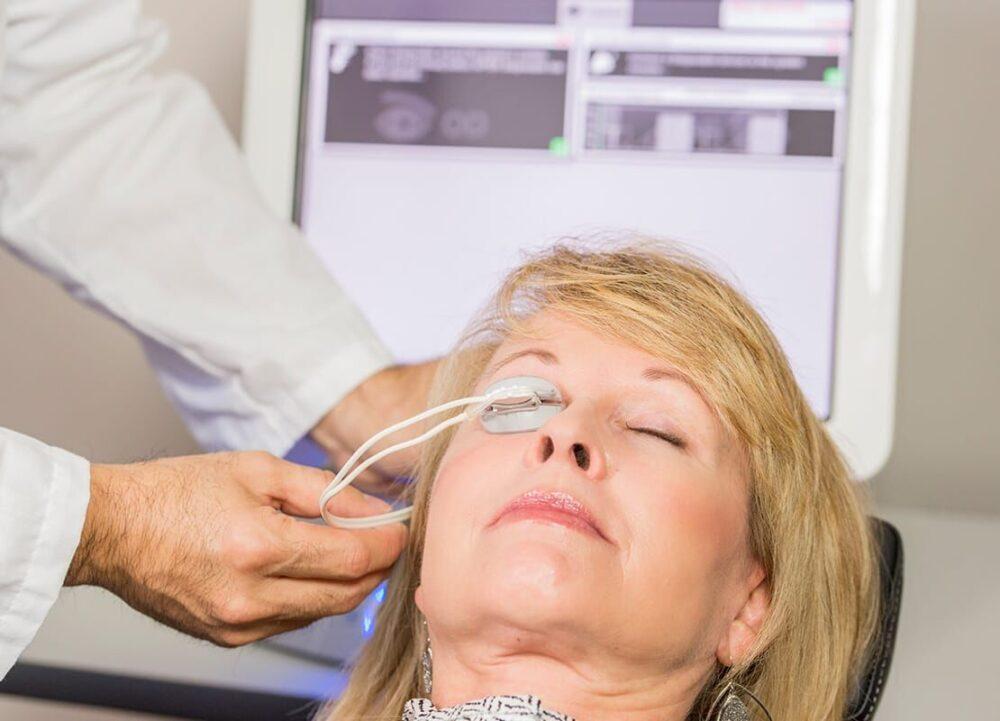
If you have read our explainer on why most dry eye is really an oil problem, LipiFlow is one of the most direct ways to treat that cause. Rather than adding water to the surface, it goes after the blocked meibomian glands themselves, the tiny oil glands in your eyelids whose failure drives evaporative dry eye.
What LipiFlow does
LipiFlow is a vectored thermal pulsation treatment. A single-use device sits over the eyelids and does two things at once: it holds the inner surface of the upper and lower lids at 42.5 °C, where the glands actually are, while an inflatable bladder pulses pressure on the outer lids to milk the softened oil out. One session takes about 12 minutes and treats both eyes. Warming from the inside is the key difference from a warm face-cloth at home, which struggles to get the inner lid warm enough for long enough.
The pooled evidence: ten randomised trials
A systematic review and meta-analysis pooled ten randomised controlled trials, 761 patients in total, comparing LipiFlow with lid hygiene (Hu, Zhu and Liu, Graefe's Archive for Clinical and Experimental Ophthalmology, 2021). A meta-analysis combines the results of separate trials into one estimate. Each result below is a mean difference, the average gap between LipiFlow and lid hygiene, with a 95% confidence interval: the range within which the true effect most likely sits. If that range does not cross zero, the result is statistically significant.
- Symptoms on the OSDI questionnaire (0 to 100): 7.4 points better with LipiFlow (95% CI 3.7 to 11.1 points).
- Symptoms on the SPEED questionnaire (0 to 28): 2.7 points better (95% CI 1.5 to 4.0).
- Number of glands producing liquid oil: 1.3 more (95% CI 0.8 to 1.8); gland secretion quality score: 4.1 points better (95% CI 1.2 to 7.0).
- Corneal staining (surface damage): 0.42 points lower (95% CI 0.1 to 0.75).
Adverse events were comparable between LipiFlow and lid hygiene. The authors flagged that some of the included trials analysed eyes rather than people, which inflates apparent precision and was the main source of inconsistency between trials, and they called for larger, better-designed studies. So the pooled effect is real but modest: about 7 points on a 100-point symptom scale, on average, over lid hygiene.
How long one treatment lasts: the 12-month trial
The durability question was tested in a 200-person, nine-site US trial (Blackie et al., Clinical Ophthalmology, 2016). Half had a single 12-minute LipiFlow treatment; the other half did twice-daily 10-minute warm compresses plus lid scrubs for three months, with a diary to track compliance. Gland function was scored by expressing 15 lower-lid glands (0 to 45). Nobody was masked, which the authors themselves call a significant limitation.
- At three months, gland function improved significantly more with LipiFlow than with compresses (P < 0.0001), and symptoms (OSDI) fell more (P = 0.0068). Three months of diligent warm compresses lifted the gland score from 6.3 to 11.0; when that group then crossed over to LipiFlow, it rose to 18.5 within a month.
- At 12 months, among people who had only one LipiFlow treatment and no other prescribed therapy, mean gland score went from 6.4 to 17.3 and mean OSDI roughly halved, from 44.1 to 21.6 (both P < 0.0001).
- 86% of the LipiFlow group, and 89% of the crossover group, needed no additional prescribed dry eye treatment for the full 12 months. Around 10 to 12% went on to combination therapy and 1 to 2% had a second LipiFlow.
- People with milder gland disease and a shorter time since diagnosis gained more, which supports treating earlier rather than later. Patients in this trial had been symptomatic for 1.6 to 3.2 years on average before their MGD was diagnosed.
Side effects were uncommon and mild: 5.1% of LipiFlow patients had a transient event, most often eyelid discomfort, compared with 7.1% of compress users, most often eyelid dermatitis. No serious device-related events occurred. Two of the three authors were employed by the device manufacturer, and participants did not pay for treatment.
What the studies can't tell us
The 12-month figures come from an open-label study where everyone knew who had been treated, so some of the symptom benefit may reflect expectation. No confidence intervals were reported for the 12-month results, and the trial did not image the glands beforehand, so it cannot say how much gland loss is too much for LipiFlow to help. The comparator throughout was warm compresses or lid hygiene, not IPL or another device, so these studies do not tell you which treatment is best for you. The meta-analysis authors were candid that trial quality was mixed. And LipiFlow works on glands that still have function to recover; it is not a rescue for glands already lost. Dry eye remains a chronic condition, and results vary from person to person.
An honest word on expectations
For some people LipiFlow is a stand-alone treatment; for others it works best alongside IPL, lid hygiene or drops. The plan should follow your measurements, including meibography to image the glands, rather than a one-size-fits-all script.
Being assessed in New Zealand
LipiFlow is one of several gland-based treatments offered through the Dry Eye Specialist Group, a network of optometrists across New Zealand. A proper assessment measures your tear film and images your glands first, so treatment is matched to what your eyes actually need. You can find your nearest clinic or call the group on 0800 349 379. The Dry Eye Evaluation is a paid consultation. The New Zealand Eye Research Centre follows the evolving evidence base for these treatments.
This article is general information and not a substitute for a clinical assessment. Whether LipiFlow suits you depends on an examination of your own eyes.
References
Sourced and verified via PubMed.
- Hu J, Zhu S, Liu X. Efficacy and safety of a vectored thermal pulsation system (Lipiflow) in the treatment of meibomian gland dysfunction: a systematic review and meta-analysis. Graefes Arch Clin Exp Ophthalmol. 2022;260(1):25-39 (published online 2021). PMID 34374808. https://doi.org/10.1007/s00417-021-05363-1
- Blackie CA, Coleman CA, Holland EJ. The sustained effect (12 months) of a single-dose vectored thermal pulsation procedure for meibomian gland dysfunction and evaporative dry eye. Clin Ophthalmol. 2016;10:1385-96. PMID 27555745. https://doi.org/10.2147/OPTH.S109663
