
Serum eye drops for severe dry eye: does stronger work better?
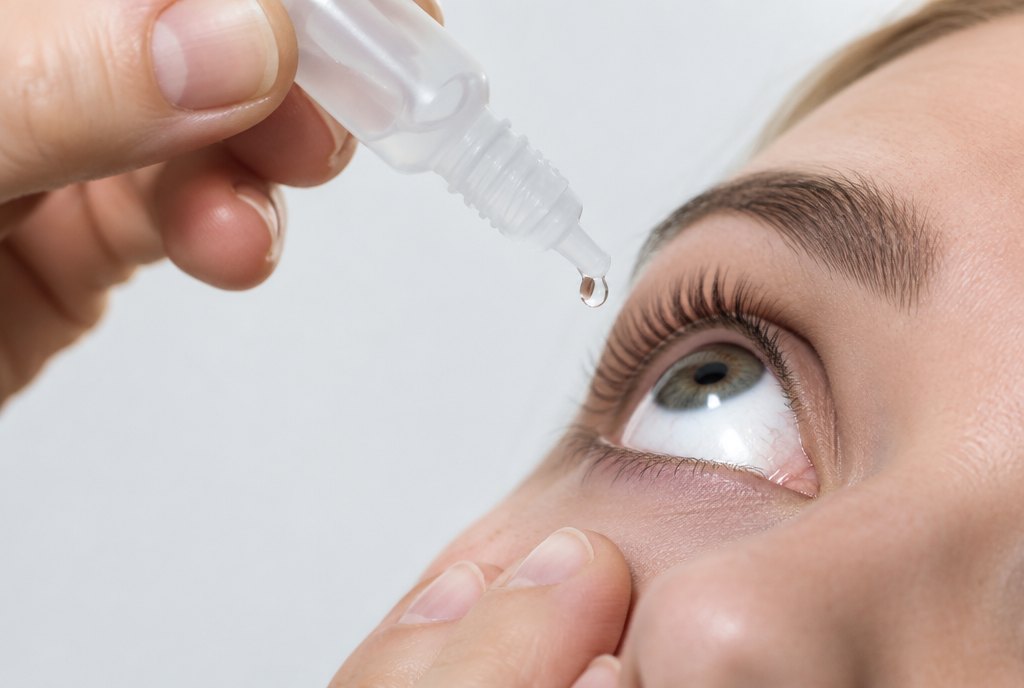
If you live with severe dry eye and ordinary lubricating drops are not doing enough, you may have heard of serum eye drops. A natural question follows: if they are made from your own blood, does a stronger mix work better than a diluted one? A Belgian trial published online in The Ocular Surface (2026) set out to test exactly that, comparing 20% and 100% serum drops with preservative-free artificial tears.
One thing to say plainly at the start: we could only read the published abstract of this paper, not the full text. Every number below comes from the abstract, and several important details could not be checked. We list them further down.
What are autologous serum eye drops?
"Autologous" means "from yourself". A sample of your own blood is taken, the clear liquid part (the serum) is separated, and it is prepared as eye drops, either full strength (100%) or diluted (20% in this trial).
These drops are a specialist option for severe disease, not a first step. They sit well beyond lid hygiene, lubricants and the prescribed medicines for dry eye that most people try first. Whether they are suitable for you, and how you might access them, is something to discuss with your optometrist or ophthalmologist.
What the trial did
Researchers at University Hospital Ghent randomised 46 patients with severe dry eye disease. It was a crossover study, which means each person used all three treatments, one after another, rather than being put into separate groups:
- preservative-free artificial tears
- 20% autologous serum drops
- 100% autologous serum drops
Each treatment was used for 8 weeks, with a 2-week washout between treatments. The study is described as blinded, although the abstract does not say who was blinded or how.
The main outcome was the Ocular Surface Disease Index (OSDI), a symptom questionnaire. The team also measured signs: staining of the eye surface (using a grading system called the SICCA ocular surface staining score), tear break-up time, the Schirmer tear volume test, vision, redness and meibomian gland grading. Tear cytokines (inflammation signalling molecules) were analysed and the dropper vials were cultured for bacteria.
What it found
Symptoms. Compared with baseline, the mean improvement in OSDI score was:
- 3.0 with artificial tears (p = 0.35)
- 12.3 with 20% serum (p < 0.001)
- 19.5 with 100% serum (p < 0.001)
Surface staining. The mean improvement in the SICCA staining score was 0.96 with artificial tears (p = 0.002), 1.63 with 20% serum (p < 0.001) and 1.95 with 100% serum (p < 0.001).
A quick note on those figures. A P-value is the probability of seeing a change this large if there were really no change at all; below 0.05 is the usual threshold for "unlikely to be chance". So the symptom change on artificial tears could easily be chance, while the changes on both serum strengths are unlikely to be.
Read the comparison carefully
Every result above is a change from baseline within one treatment. The abstract does not report a direct statistical test of 100% serum against 20% serum, or of either serum against artificial tears, for symptoms or staining. A bigger average change is not the same as a demonstrated difference between treatments. Without the head-to-head result, and without any confidence intervals, we cannot tell how sure to be that stronger really was better.
Signs, not just symptoms
Staining improved on all three treatments, including artificial tears. For every other secondary outcome (tear break-up time, Schirmer test, vision, redness and meibomian gland grading), the abstract states that no significant differences were found between treatments.
The tear cytokine analysis suggested that serum drops were associated with a less inflammatory environment on the eye surface than artificial tears. The abstract gives no figures for this, so treat it as a signal rather than a result.
The finding about the vials
Cultures were positive in more than half of the vials, and this applied to the artificial tear vials as well as the serum vials. Most grew commensal flora, meaning the bacteria that normally live on skin and eyelids.
The abstract does not report any infections, but it also does not say there were none. The practical message is about handling: follow storage and discard instructions exactly, wash your hands first, and keep the tip away from your lashes, lids and fingers.
What the studies can't tell us
- We read the abstract only. We could not check how many people completed the trial, the dosing schedule, baseline scores, how blinding worked, adverse events, funding or conflicts of interest, or the authors' own list of limitations.
- No head-to-head numbers. Direct comparisons between the three treatments for symptoms and staining are not in the abstract.
- Short washout. In a crossover trial, the effect of one treatment can carry over into the next period. A 2-week washout may not be long enough for a severely dry eye surface to return to its starting point. We could not see whether the authors tested for this.
- Small and short. Forty-six patients at one centre, with 8 weeks on each treatment, tells us little about long-term benefit or safety.
- Severe disease only. The paper's keywords point to conditions such as Sjogren's disease and graft-versus-host disease. The results do not apply to mild or moderate dry eye.
What this means for you in Hamilton
In this trial serum drops were associated with better symptoms and less surface staining in severe dry eye, with a hint that full strength may do more than diluted. It does not settle the question.
For most people, the bigger gains still come from finding out why the eye is dry in the first place. That might be meibomian gland dysfunction, eyelid inflammation, an autoimmune condition, or a mix. We describe the steps in what a dry eye treatment plan looks like, and our guide to dry eye drops explains where lubricants fit.
The comparison treatment in this trial was a preservative-free artificial tear; the abstract does not name the product. If you are looking for a preservative-free lubricant, Hylo-Forte is available from the Rose Optometry online store. It was not the product tested in this study.
If your dry eye is severe or not responding to treatment, the optometrist team at Rose Optometry can assess the cause, discuss the options and arrange referral to an ophthalmologist where specialist treatments are worth considering. You can read more about the dry eye clinic at Rose Optometry in Hamilton. The optometrists at Rose Optometry are Anjali Hira, Emilie Lawson, Jacqueline Rowe, Jagrut Lallu, Jason Shen, Jessica Wood and Stella Wong, and dry eye care is part of their clinical practice.
Rose Optometry is part of the Dry Eye Specialist Group, alongside Visique Rototuna Optometrists and other member practices. If you live outside Hamilton, your local Dry Eye Specialist Group member practice is the place to start.
Reference
- Roels D, van Gremberghe I, Huys L, Boelens J, Deprez J, Peene I, Elewaut D, Leroy BP, Claerhout I, Kerre T. Efficacy and Safety of 20% and 100% Autologous Serum Eye Drops in Patients with Severe Dry Eye Disease: a prospective, blinded, randomized, crossover study. The Ocular Surface. 2026; published online 3 October 2026 (volume and pages not yet assigned). PMID 42829159. https://doi.org/10.1016/j.jtos.2026.10.001
