
Warm compresses done right: does the type of mask matter?
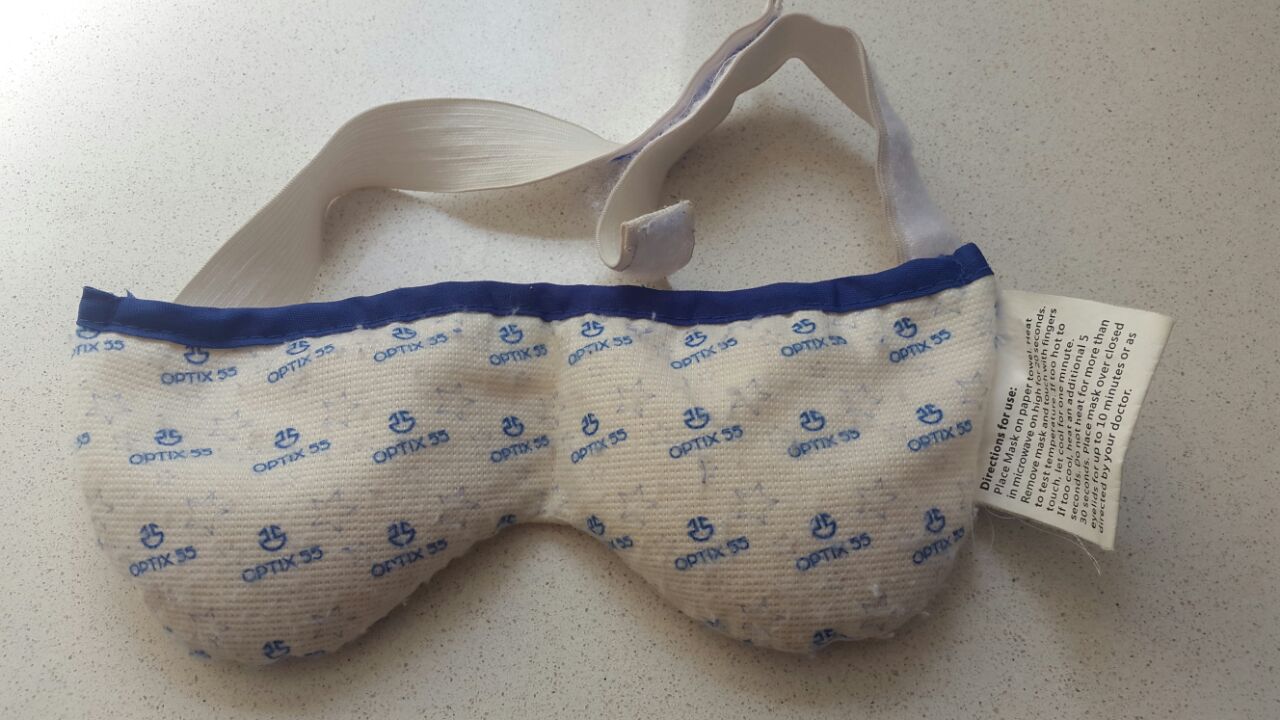
Warm compresses are one of the most common first steps for meibomian gland dysfunction (MGD), where the oil glands along the eyelid margins become blocked or sluggish. The idea is simple: gentle, sustained heat may help soften thickened oils so they flow more freely into the tear film. But there are many ways to apply heat, from rechargeable electric masks to single-use self-heating ones. Does the type of mask matter? A small 2026 trial from Saudi Arabia compared two.
How the trial was set up
Al Saqr and colleagues ran a prospective, single-centre, randomised crossover trial at King Saud University in Riyadh. In a crossover trial, each person tries both treatments in turn, separated by a break, so they act as their own comparison.
- Who took part: 15 adults aged 18–40 with dry eye linked to MGD, with a mean age of 22.27 ± 1.60 years. Entry required an OSDI symptom score of at least 13 and a tear break-up time (TBUT) of 10 seconds or less in at least one eye. Baseline OSDI was 19.2 ± 5.3, described as mild to moderate.
- Device A: a USB-powered heated eye mask with adjustable temperature (typically 37°C to 47°C according to the manufacturer). The setting used in the trial was not reported.
- Device B: a disposable self-heating mask that warms through iron-powder oxidation, with a manufacturer-reported average surface temperature of about 41 °C.
- Schedule: each mask was used on both eyes for 10 minutes, once daily, for 5 consecutive days, with a two-week washout between phases. Sessions took place in the clinic.
- Outcomes: the main outcome was non-invasive TBUT (how long the tear film stays stable). Tear meniscus height (TMH, a measure of tear volume) and the SPEED symptom questionnaire were also measured.
All 15 participants completed both phases, and no adverse events were reported. Masking was not reported, and because the two masks look different, participants would have known which one they were using.
What the trial found
Signs of tear film health improved more with the USB-powered mask, but symptoms did not differ between the two.
- Tear break-up time: TBUT started at 7.2 ± 1.5 seconds (USB phase) and 7.3 ± 1.4 seconds (self-heating phase). In the paper's results table, Day 5 TBUT was 9.5 ± 2.2 seconds with the USB mask and 7.9 ± 2.3 seconds with the self-heating mask, a between-device difference with p = 0.026. The improvement from baseline was significant for the USB mask (p = 0.004) but not for the self-heating mask (p = 0.082). Note that the paper's abstract gives a different Day 5 value for the self-heating mask than its table does.
- Tear meniscus height: both masks increased TMH from a baseline of 0.16 ± 0.05 mm. In the results table, Day 5 values were 0.28 ± 0.07 mm (USB) and 0.22 ± 0.06 mm (self-heating), with a between-device p = 0.037. Again, the abstract and table give different Day 5 values.
- Symptoms: SPEED scores started at 7.1 ± 1.8. By Day 5 they were 5.6 ± 1.7 (USB) and 5.9 ± 1.4 (self-heating). Neither change from baseline was statistically significant (p = 0.71 and p = 0.80), and the difference between masks was not significant either. The paper reports this between-device p-value as 0.355 in the text and 0.59 in the table.
What do these p-values mean?
A p-value estimates how surprising a result would be if there were truly no difference. Values below 0.05 are conventionally called "statistically significant". The Day 5 TBUT result (p = 0.026) suggests the gap between masks was unlikely to be chance alone, but it rests on a 1.6-second difference in averages, with individual variation of more than 2 seconds, in 15 people. The paper did not report confidence intervals, which would show the plausible range of the true difference.
What the studies can't tell us
- Very short use. Each mask was used for 10 minutes once a day for just 5 days. That is much shorter than many real-world warm compress routines and can't show lasting gland changes.
- Small, young group. With 15 participants averaging around 22 years old, the results may not apply to the older people who more commonly have MGD. Sex was not reported.
- Mild disease and a dry climate. Participants had fairly mild dry eye, and the trial ran in Riyadh. Results in Hamilton's climate could differ.
- Possibly unequal heat. Lid temperature wasn't measured, and the USB mask's setting wasn't reported. The comparison may be as much about temperature as about mask type.
- Signs, not symptoms. Tear film measures improved, but symptom scores didn't change significantly with either mask, and OSDI wasn't re-measured.
- Design and reporting gaps. There was no masking, no analysis of carryover between phases, and the trial was registered after recruitment began. The abstract and results table disagree on several numbers, and funding information wasn't available in the text we reviewed.
Practical takeaways
This trial doesn't prove that one type of mask is better for your eyes in the long run. It does hint that how consistently heat is delivered may matter. The authors suggested the self-heating mask's effect levelled off after Day 3 and linked this to air conditioning and low humidity, though lid temperature wasn't measured.
If you've been advised to use warm compresses, a few general principles may help:
- Aim for consistent, comfortable warmth. A compress that cools quickly may deliver less heat than you think. It should never feel hot or painful.
- Follow your clinician's instructions on how long, how often and at what temperature. These can differ depending on your eyes and the device.
- Be consistent. MGD is usually a long-term condition, and benefits, if any, tend to depend on a regular routine.
- Combine with lid care if advised. Heat is often one part of a broader plan. Our post on lid wipes for blepharitis looks at the evidence for one common add-on.
- Stop and seek advice if you notice redness, irritation or worsening vision.
Warm compresses help some people but not others, and they may not be enough when glands are significantly blocked. Our treatments page explains other options. At Rose Optometry in Hamilton, our optometrists, including Jagrut Lallu and Jacqueline Rowe, can examine your oil glands and help tailor a home routine. You can read more about the Rose Optometry dry eye clinic, or book a Dry Eye Evaluation at a member practice.
References
- Al Saqr AM, et al. USB-powered vs. self-heating warm compresses for meibomian gland dysfunction: A prospective randomized crossover clinical trial. PLoS One. 2026;21(10):e0360762. PMID 42868127. DOI: 10.1371/journal.pone.0360762
