
Tixel for evaporative dry eye: promising early data, and why 10 patients isn't proof
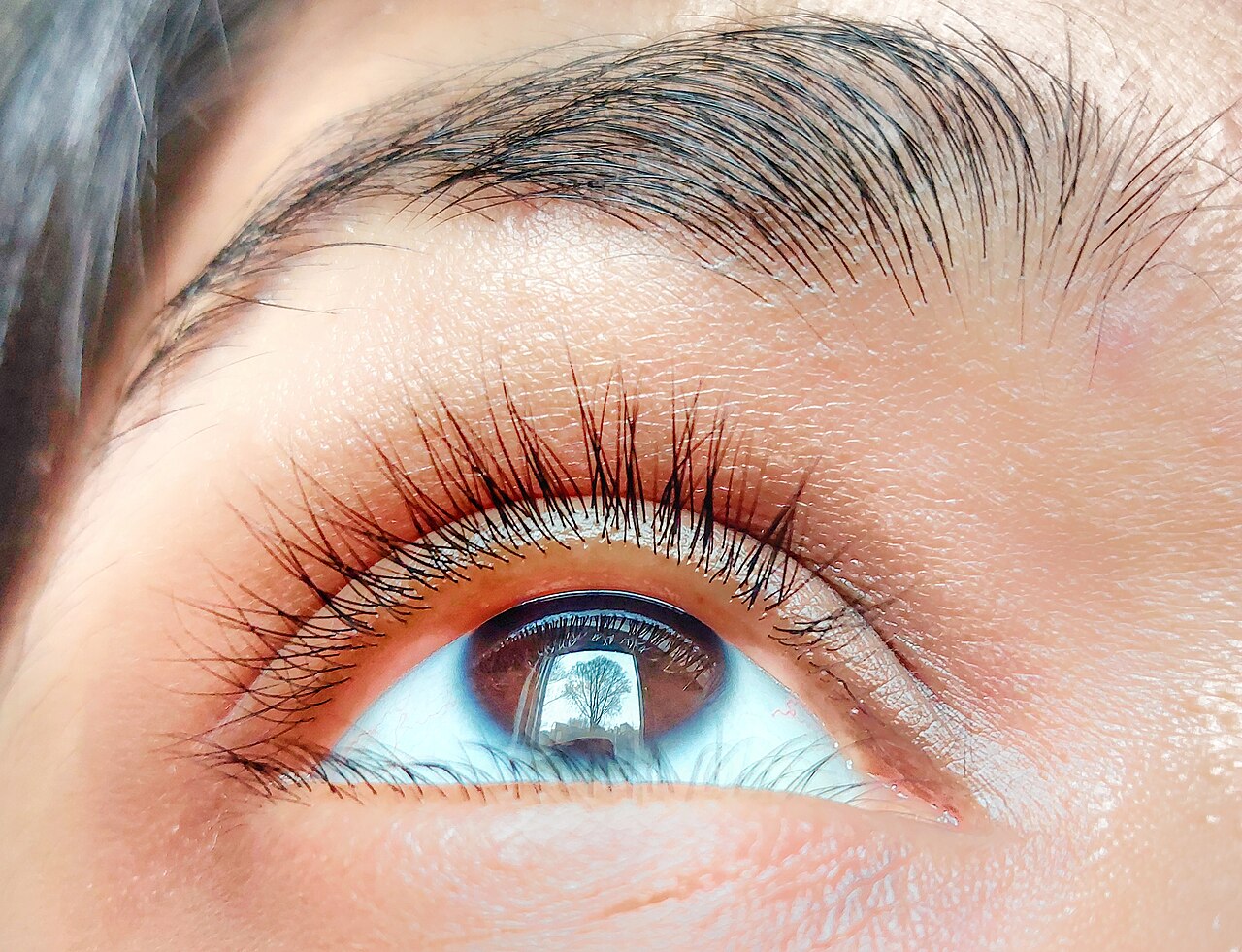
Tixel is what researchers call a thermo-mechanical action device, used on the eyelids. It is one of several newer in-clinic options being explored for evaporative dry eye, where the tear film evaporates too quickly, often because the oil (meibomian) glands in the eyelids aren't working well. A small 2026 study from the United Kingdom reports encouraging early results. Here's what it found, and why it can't yet tell us how well Tixel works.
This article is based on the published abstract; we were not able to review the full paper.
How the study was set up
The study, by Rawal and colleagues and published in Contact Lens and Anterior Eye, was led from the Optometry and Vision Sciences Research Group at Aston University in Birmingham. The abstract describes it as a prospective, controlled, open-label study.
- Who took part: 10 people (7 females and 3 males) with a mean age of 42 ± 9 years.
- Entry criteria: an Ocular Surface Disease Index (OSDI) symptom score above 23, and a non-invasive tear break-up time (NIBUT) of less than 10 seconds. NIBUT measures how long the tear film stays stable without adding dye.
- Treatment: three sessions of Tixel on both eyes, at visits 1, 2 and 3. The first four visits were about 2 weeks (± 5 days) apart.
- Follow-up: a fifth visit took place 20 weeks after the first.
- Measures: OSDI, the SPEED dryness questionnaire and NIBUT at every visit. Tear samples from the left eye only were analysed by chromatography to look at tear lipid (oil) content.
"Open-label" means everyone knew they were receiving Tixel. Although the abstract uses the word "controlled", it does not describe a separate group who received a sham treatment, a different treatment or no treatment. All 10 participants appear to have received Tixel, and the results compare the same people at visit 1 and visit 5. That matters a great deal, and we explain why below.
What the study found
Between visit 1 and visit 5 (mean ± standard deviation):
- OSDI symptom score fell from 45.11 ± 18.70 to 21.72 ± 21.25 (P < 0.001). Lower is better.
- SPEED score fell from 14.70 ± 1.70 to 8.80 ± 6.12 (P < 0.05). Lower is better.
- NIBUT rose from 4.73 ± 2.37 to 8.01 ± 2.32 seconds (P < 0.05). Higher is better.
- Tear lipids: results varied between individuals and were influenced by sample volume. The authors report that some participants showed an increase in total lipid levels after therapy.
- Safety: no adverse events were documented during the study.
The authors conclude that Tixel is a promising option for evaporative dry eye and that its effects on tear lipids deserve further investigation. That's a fair summary of an early-stage study, and "promising" is the right word: it isn't the same as "proven".
What do the P-values mean?
A P-value estimates how surprising a result would be if there were truly no change. A P-value below 0.05 is conventionally called "statistically significant". Here, it tells us the scores at visit 5 were unlikely to equal the scores at visit 1 by chance alone.
What it does not tell us is why they changed. The abstract does not report confidence intervals, which would show the plausible range of the true change. The large standard deviation for OSDI at visit 5 (± 21.25) also suggests that some people improved much more than others.
Why there are no between-group results
In a randomised controlled trial, one group gets the treatment and a comparison group gets something else, such as a sham procedure or standard care. Comparing the two groups shows how much of the improvement is due to the treatment itself.
This study has no comparison group, so between-group results simply don't exist. Every number above is a within-group change. Several things other than Tixel can make dry eye scores improve over 20 weeks:
- Regression to the mean. People often join studies when their symptoms are at their worst, and symptoms tend to drift back towards average over time.
- Expectation effects. When people know they're receiving a new treatment, symptom questionnaires can improve on hope and attention alone.
- Natural fluctuation. Dry eye varies with season, screen use, indoor heating and many other factors.
- Extra care. Regular study visits can change habits, such as blinking or lid care.
None of this means Tixel doesn't work. It means this study can't separate Tixel's effect from these other influences.
What the studies can't tell us
- Very small sample. With 10 participants, results can be swayed by one or two people, and uncommon side effects would be unlikely to show up.
- No comparison group and no masking. Without a sham or alternative treatment, and with participants aware of their treatment, we can't tell how much improvement was due to Tixel.
- Variable lipid results. The tear lipid findings were mixed and affected by sample volume, so they can't yet explain how Tixel might work.
- Limited follow-up. Results run to 20 weeks after the first session. We don't know how long any benefit lasts or when retreatment might be needed.
- Abstract only. We couldn't check the full methods, how missing data were handled, or the complete funding and conflict-of-interest statements. The PubMed record lists non-government research support.
- No comparison with other treatments. The study doesn't show how Tixel compares with established options such as warm compresses, lid hygiene, thermal pulsation or IPL.
Where this leaves Tixel
This is a reasonable first step: a small, carefully measured study suggesting that Tixel may improve symptoms and tear stability in evaporative dry eye, with no adverse events documented in this group. The next step is a larger, randomised trial with a sham or active comparison group and masked assessment.
In the meantime, Tixel is one tool among several, and the right approach depends on what's driving your dry eye. You can compare options on our treatments page. If you've already tried treatments without much success, our post on IPL in hard-to-treat MGD may also interest you, and our summary of a thermal pulsation trial covers another heat-based approach.
At Rose Optometry in Hamilton, Tixel is provided by Jagrut Lallu, who can discuss whether it may be suitable for you after a thorough assessment of your eyelids and tear film. To start, book a Dry Eye Evaluation through a member practice.
References
- Rawal BR, Franklin VJ, Blanco-Vázquez M, et al. Effect of a thermo-mechanical action device on symptoms, signs and tear lipid profile in patients with evaporative dry eye disease. Contact Lens and Anterior Eye. 2026;49(3):102656. PMID 42001606. DOI: 10.1016/j.clae.2026.102656
