
Tixel for dry eye: the thermomechanical treatment for stubborn meibomian gland dysfunction
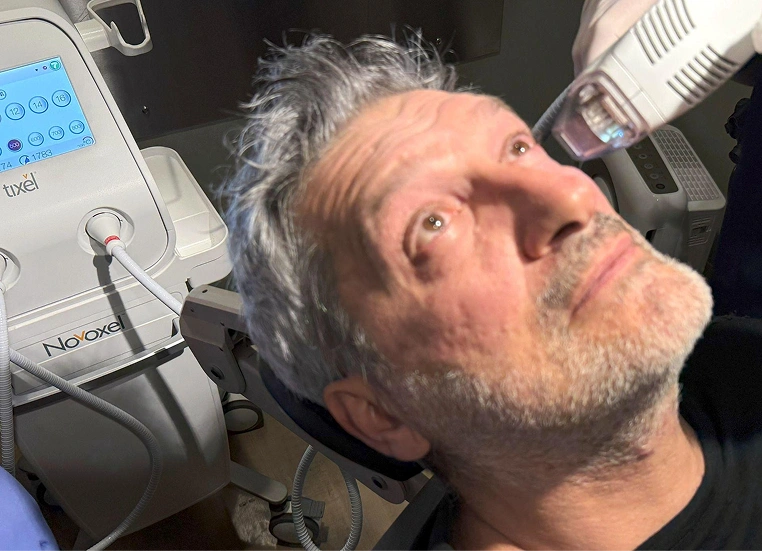
Tixel is one of the newer additions to the dry eye toolkit, and it works on the same underlying problem as LipiFlow and IPL: meibomian gland dysfunction (MGD), the blocked-oil-gland problem behind most evaporative dry eye. Because it is newer, the evidence is thinner, and we think you deserve to see exactly how thin.
What Tixel does
Tixel is a thermomechanical device. A titanium tip made of many tiny pyramids is briefly touched to the eyelid skin, transferring controlled heat into the tissue to reduce inflammation and improve the flow of oil from the meibomian glands. In both published studies it was given as three treatments two weeks apart. Because it treats the lid skin rather than the eye, it is being explored for people whose dry eye is driven by lid-margin and gland inflammation.
The pilot study: promising, but nobody to compare against
The first report was a single-centre Israeli pilot of 40 patients over 45 (80 eyes) with evaporative dry eye due to MGD (Safir et al., Contact Lens & Anterior Eye, 2022). One detail matters: patients were recruited from people seeking cosmetic eyelid rejuvenation who also had dry eye, not a typical dry eye clinic population.
The tip was heated to about 400 °C and applied 15 times per eyelid in two rows (at the lid margin and 5 mm away), for 8 milliseconds on the lower lid and 6 on the upper, at 400 micrometres protrusion. The inner corner of the lid was avoided to protect the tear drainage openings. No anaesthetic was used and the procedure took under two minutes. Mean follow-up was 2.1 months.
There was no control group. Forty patients started and 32 attended the final visit, so a fifth were lost. Baseline to last visit:
- Symptoms (SPEED II questionnaire, 0 to 28): 16.5 to 11.8. Visit by visit it ran 13.4, 12.6, 11.4, 11.5: most of the change came after the first treatment, then levelled off.
- Corneal staining (surface damage, 0 to 5): 2.0 to 0.5, with the same early-then-flat pattern (0.8, 0.4, 0.4, 0.5).
- Tear break-up time (how long the tear film stays stable): 2.7 to 6.5 seconds.
- MGD score (1 to 4): 2.7 to 1.2.
- Lubricant drop use: 3.4 to 1.9 times a day.
All were statistically significant (P < 0.001). Two minor side effects were recorded: one patient had watery eyes for 24 hours, one had mild burning for two days. The study had no funding and the authors declared no competing interests. They set out their own limitations plainly: no placebo group, so a placebo effect on symptoms cannot be excluded; an unmasked examiner; COVID-era dropout and only about ten weeks of follow-up; and an unproven mechanism. They called for a double-blind randomised trial.
The six-month extension: durable, but only in people who responded
The second paper (Sadri et al., Journal of Ocular Pharmacology and Therapeutics, 2025) follows a three-month randomised, masked, multicentre pivotal study at five US sites, in which three Tixel sessions were compared with a single LipiFlow session and judged by masked assessors. The extension took some Tixel-treated patients out to six months. It is single-arm, with no LipiFlow comparison carried forward and an unmasked assessor.
Crucially, it enrolled only responders: people whose tear break-up time had improved by at least 2.5 seconds in at least one eye at one or three months. Twenty-one people (42 eyes) took part. The paper does not report how many were originally treated with Tixel, so you cannot work out what fraction these 21 represent.
At six months, compared with baseline:
- Tear break-up time: +5.2 ± 3.8 seconds (P < 0.001).
- Gland secretion score (0 to 45): +18.2 ± 10.9 (P < 0.0001).
- Symptoms (OSDI, 0 to 100): −24.3 ± 26.5 (P = 0.0004).
- Corneal staining: −1.5 ± 1.5 (P < 0.0001).
- No ocular adverse events.
None of these measures changed significantly between three and six months (all P > 0.05), so in responders the gains held. The wide spread after each ± sign shows individual results varied a lot. The study was funded by Novoxel, the company that makes Tixel, and two of the seven authors are Novoxel employees. That does not make the data wrong, but it is a reason to wait for independent confirmation.
Why a responders-only study cannot tell you your own odds
Imagine 100 people are treated and only those who improved are invited back. If they are still better six months later, that shows the benefit lasts in the people it worked for; it says nothing about those never invited. Without the starting number, you cannot tell whether responders were most of the group or a minority. How long a benefit lasts and how likely you are to get it are different questions, and this study answers only the first.
What the studies can't tell us
Neither paper includes a sham or untreated comparison in its own analysis, so the numbers cannot separate the effect of Tixel from being in a study, using drops more carefully, or the natural ups and downs of dry eye. The pilot was small, unmasked, cosmetically recruited, and lost a fifth of its patients. The extension excluded non-responders, so the true response rate in an unselected clinic population is unknown, as are durability beyond six months and the need for retreatment. The masked LipiFlow comparison is reported here only in summary, and nothing compares Tixel with IPL. In short: encouraging early data, not yet evidence that should make anyone choose Tixel over an alternative by default.
How to think about a newer treatment
Tixel is one option among several, and whether it is the right one depends on your pattern of dry eye, which is why measurement comes first. A good clinician will tell you honestly where Tixel sits relative to LipiFlow and IPL for your eyes, and none of these treatments should be sold as a cure. Dry eye is a chronic condition that is managed rather than switched off.
Being assessed in New Zealand
Tixel is among the treatments offered through the Dry Eye Specialist Group. Assessment starts by measuring your tear film and imaging your glands, so the treatment is matched to what your eyes need rather than to whatever machine is in the room. You can find your nearest clinic or call 0800 349 379. The Dry Eye Evaluation is a paid consultation. The New Zealand Eye Research Centre tracks the developing evidence for these newer options.
This article is general information and not a substitute for a clinical assessment. Whether Tixel suits you depends on an examination of your own eyes.
References
Sourced and verified via PubMed; full text of both papers reviewed.
- Safir M, Hecht I, Ahimor A, et al. The effect of thermo-mechanical device (Tixel) treatment on evaporative dry eye disease - A pilot prospective clinical trial. Cont Lens Anterior Eye. 2022;45(6):101741. PMID 35864019. https://doi.org/10.1016/j.clae.2022.101741
- Sadri E, Verachtert A, Parkhurst GD, et al. Durability of Treatment with a Thermomechanical Device in Meibomian Gland Dysfunction: An Observational Extension Study. J Ocul Pharmacol Ther. 2025;41(5):237-243. PMID 40238710. https://doi.org/10.1089/jop.2025.0033
